Today Tour de France is a commonplace name for human endurance. You might not ride a bike, but you have heard about this elite competition. Well, in the beginning of the twentieth century it used to be brutal. Seriously brutal.
I first encountered the topic of early Tour de France on a GCN YouTube channel, where they recreated a stage of 1903 on original vintage bikes. It is worth watching, especially for the thoughts on how, even today, on good tarmac and with contemporary gear, like light (or bibs), it is an extremely hard enterprise.
Now, imagine 1910, with the state-of-the-art bikes, that will not qualify today even for a commute in the city, unsupportive (mildly understated) organisers, over 4000 kilometres in three weeks in horrible weather and road conditions, and you will scratch the surface of how mad this race used to be.
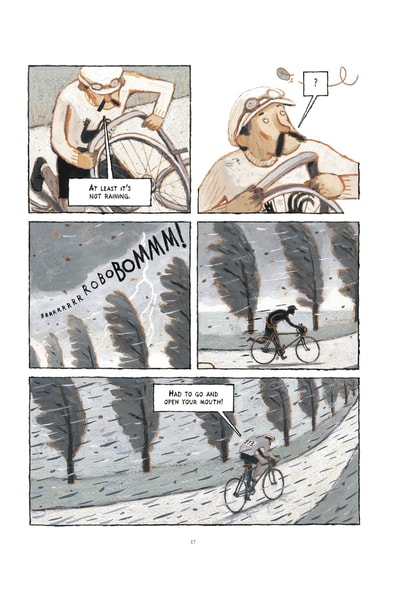
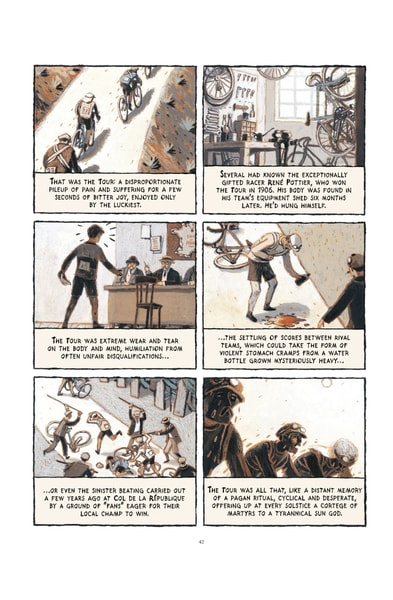
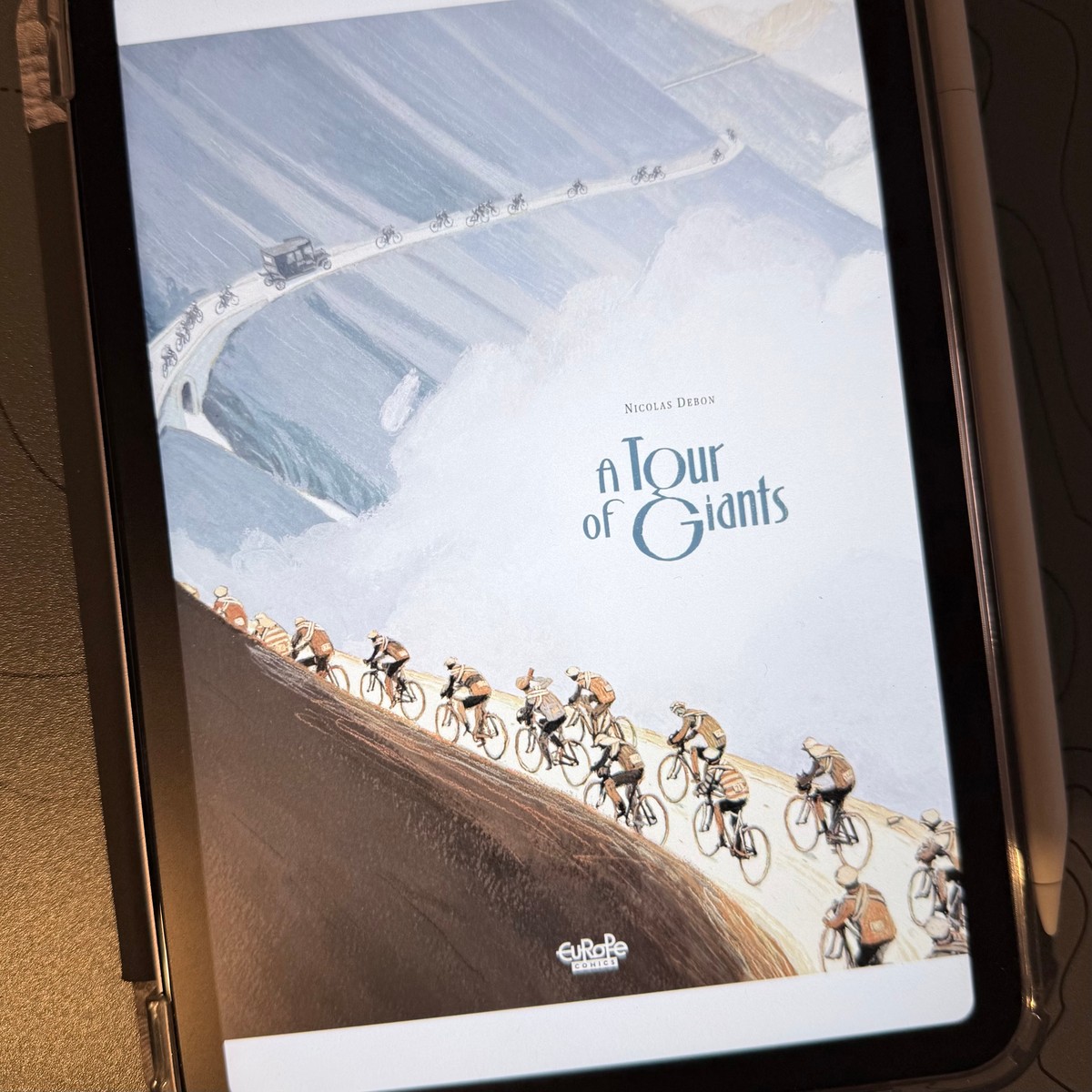
Nicolas Debon tries to convey the hardship of 1910 in frames as short as breath of a cyclist going uphill. He introduces the major contestants and their rivalry, the forces of nature these Giants had to endure, and the psychological toll too much to bear sometimes. "Murderers!" cries one of them to the organisers, and murderers these were. Circling the hexagon, as France is known, with the ever-changing terrain and climate, with inhumane rules and severe road conditions - we cannot fathom it today.
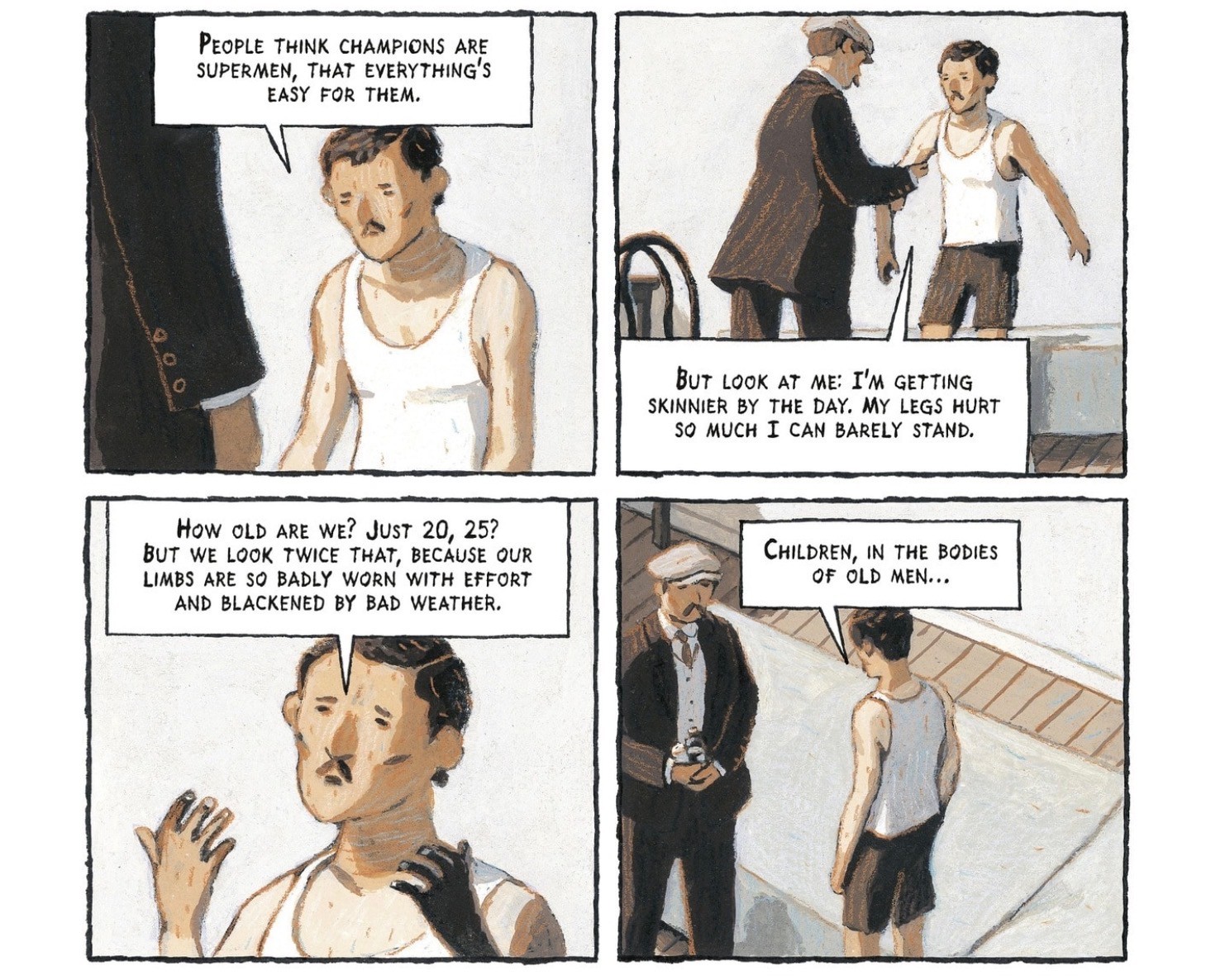
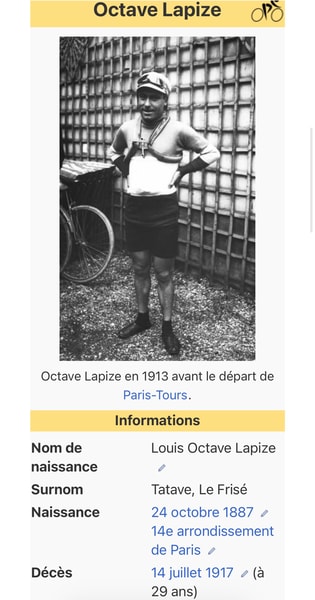
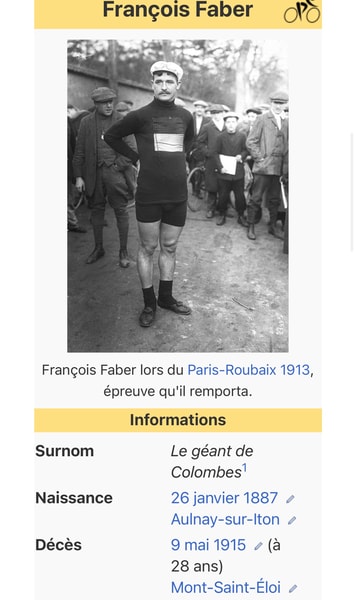
One of the topics that particularly caught me off guard, is the further fate of the winners and other racers. When the first to places of the race in 1903 made it to their sixties, Louis Octave Lapize (1st place) and François Faber (2nd place) along with many others, did not make it to their thirties. The Great War claimed the Great Men.
They are called Giants for a reason.