30, Berlin. Read and write in several languages, this is my mental dumpster/safe space


Posts tagged with graphic-novel

Thoughts on "Les Murailles de Samaris" - Les cites obscures 

All right, today I have discovered a series of graphic novels that I thought would be a treat to read. Turned out, they are also a trip. And this is amazing.

Written by the French writer Benoît Peeters and drawn by the Belgian artist François Schuiten (ultimate francophone creative duo), these graphic novels (or comics, if you prefer this term - I personally do not) take place in a parallel universe, on a huge planet with one continent. In the first book we follow Franz who got a mission to find out what the fuck is happening in Samaris - a city quite far away from his native Xhystos. He is not the first to go, because other people sent there never returned. 

If the annotation sounds good, please read it. If you can’t find the book, use this page - it is the first part of in-depth review from 2011 by Julius Darius and a piece of art in itself

Alas, spoilers, sorry, need to get it out of my chest. And no "click here to read", because it is my messy way of life. You are warned.

Mary Mother of Jesus, this was awesome! 

First of all - architecture is a hallmark of entire world-building, visually and linguistically. For example, Xhystos - native city of Franz, is probably derived from architectural term xystus - a covered portico. This whole city is based on art nouveau/art deco at its finest which also concerns the societal mores of the applicable historical period. On the other hand, Samaris is not a city per se, but a simulacrum, a huge machine, that includes people performing same parts daily. Windows are walls, walls are breakable construction material, streets are the Golden ratio of sameness. 
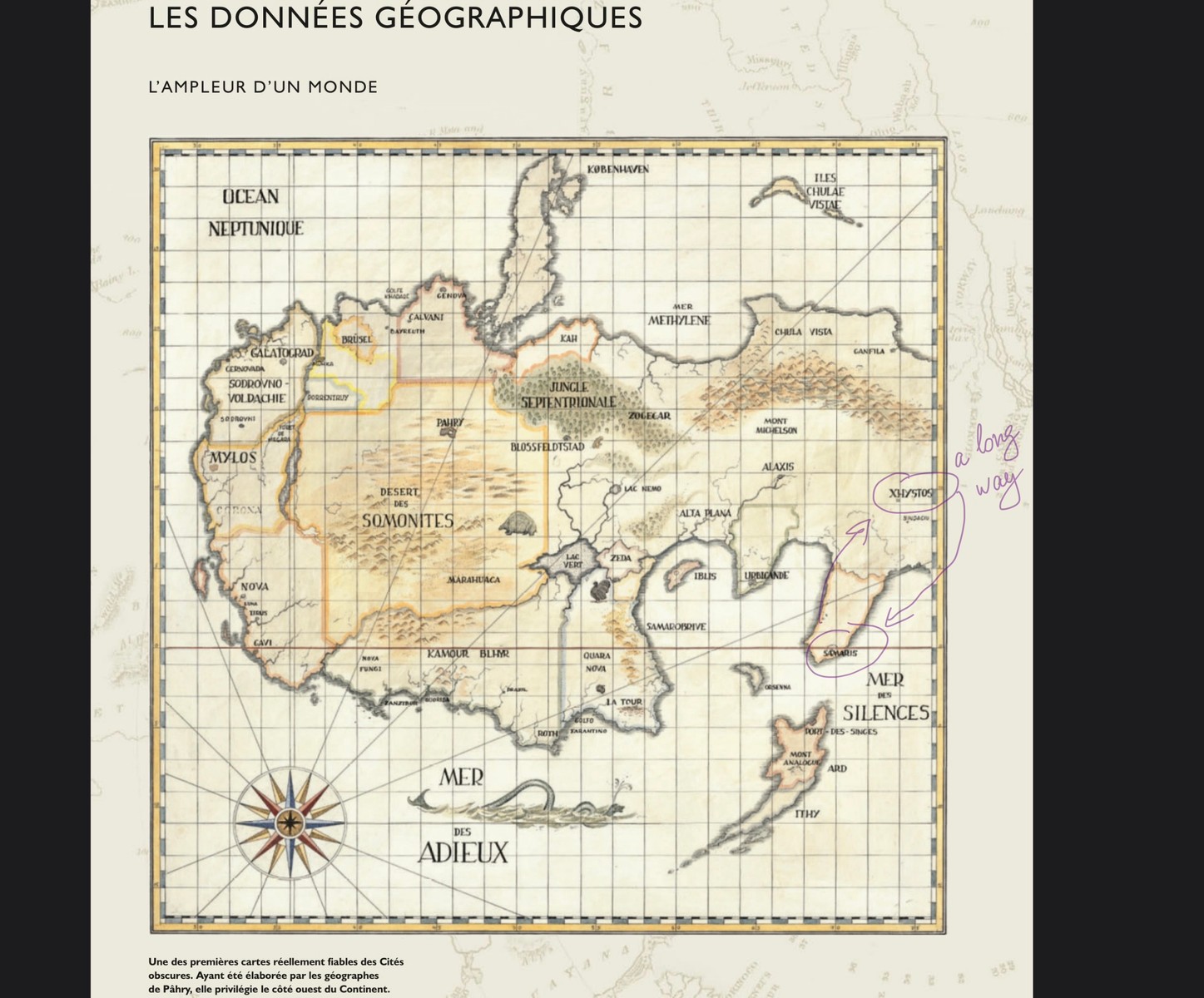
The map and the mentioned cities, look on your right

What happens to Franz is called "Samaris fever" - he ends up feeling strange and upon learning the "real" Samaris, escapes it only to find out, that his native city has gone far away in time. This fever describes the space-time confusion and I find it a genuinely complex and beautiful idea. The last thing we as readers see is a page from a book, where Samaris is pictured as an eye of a vortex - I bet you a chocolate bar, that this is a time-vortex and has something to do with a) the machine as the city, b) the size of the planet or c) something that will come up in later stories. Won’t be surprised if the authors found inspiration in Einstein’s relativity. 

Another thing that struck me was Xhystos - it resembles Vienna of 19th century in terms of bureaucracy. It is a simulacrum itself, because after getting back with Franz (a very Viennese name by the way), we see that the Council - ruling body, are not real people, but cardboard figures, well, at least one we are shown, and it is not clear wether this is objective truth, or subjective hallucination of Franz. No wonder he founds it all vexing and leaves for Samaris again, saying he should have never left. Vortex.
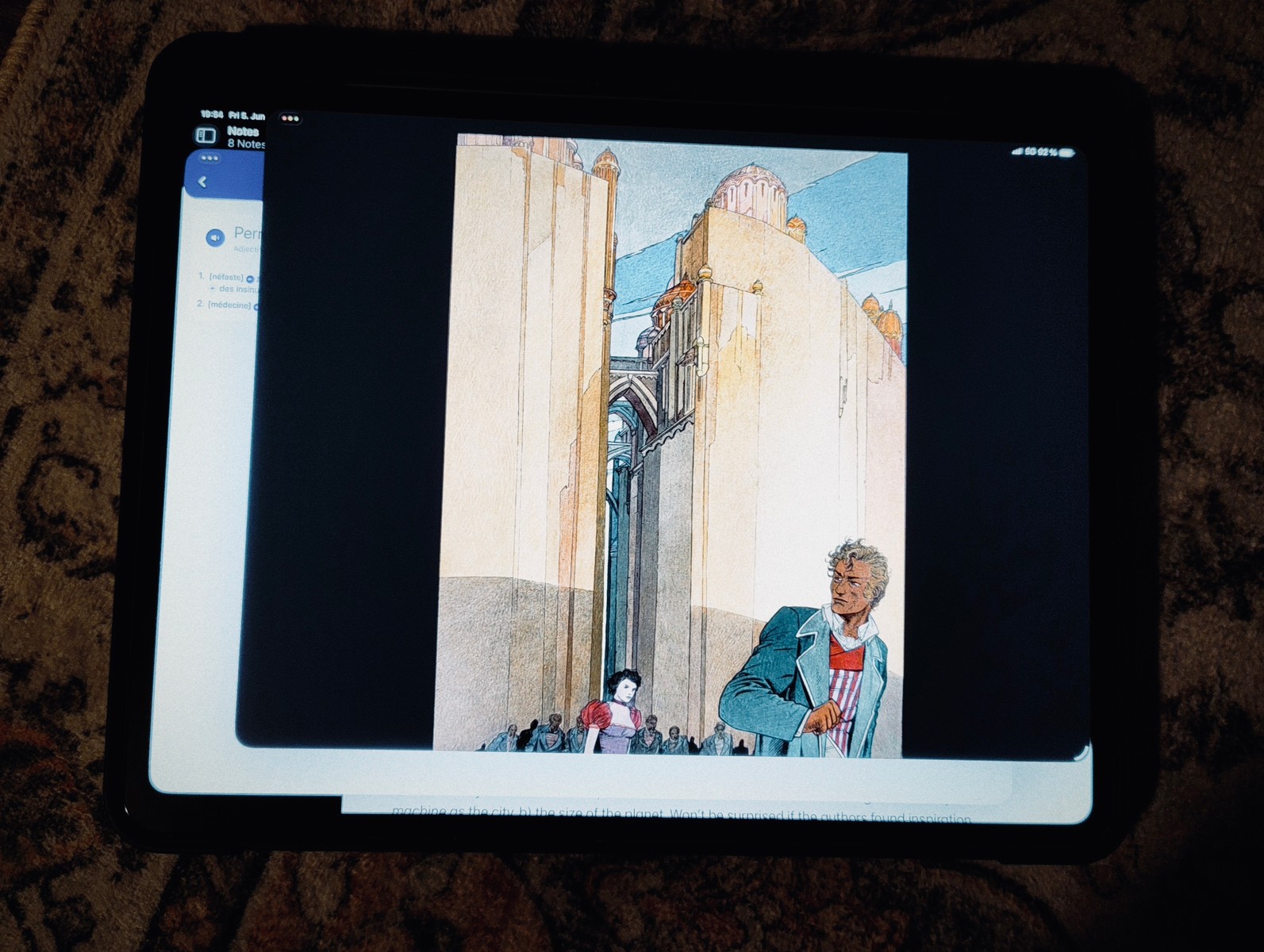
Both story and visuals are stunning

I am sorry if it all sounds chaotic, but this story is just mind-blowing. I have read it in the original French just now and can’t wait to start the next book!
Encountering one’s purpose in life is overwhelming

Sounds a bit dramatic.

Yesterday I had to go into town to take care of some papers. For context - I recently left my 9 to 5, so there is plenty of time to eat oneself with future prospects or with the lack of those. I took the opportunity to visit Modulor -  a famous art supply shop in Berlin - to buy some paper for letters. After finding the right size and colour there was nothing to stop me from wandering around and looking at nice things. In the “Textbook” section there lay the last copy of a book on graphic novels - an old passion of mine. I took it, looked through it, put it back, went around other tables, got back, took it again, looked at the price, put it back, went to the markers’ wall, got back, took it for the last time and went to the cash desk. 

Today I have been flipping through the pages, looking at some french BD online (there is a post coming in a couple of months about two of those) and thinking, how cool is it to be able to tell stories visually. My head has been bursting with ideas since I quit antidepressants couple of months ago. Long story short, I have started googling the courses on illustration. Found one. Started one. The last several hours I have been researching the material necessary for the plot. 

My head is fuzzy. Heartbeat elevated. I smoke one rolled cigarette after another. Go back to the internet to learn more about graphic novels. My room is in mess of papers and books I have adjacent to the theme. More books ordered. Following advice from the course, moodboard is saved online. 

I have been drawing sporadically since childhood, mostly cartoonish character. Never learnt the anatomy or perspective or light. I have zero pencils at home, only a tablet with Procreate. Can my idea potentially be monetised? Don’t think so. Is there a way to actually draw something, tell a huge story and find the audience? Don’t really care. What I have realised, is that I want to study graphic novels academically. For the last five years it was clear, that I’ll have to get back to university one day, but I wanted to find something meaningful, not like the last time, when the acceptance in the uni was the most important factor (after 4 wasted years I have lost my English and cannot for the love of God call myself a proper linguist, we did nothing of this science there). I have already found the right program and was just thinking about what it is I really want to explore. Turns out, the visit yesterday solved this problem. I know what I want to study academically now. Not in the bachelor years, of course, however, who knows. But as a proper nerd, I cannot allow myself to go for the theory alone. I would love to first try the practical aspect to understand what one has to look for, how these works are created. Get the hands dirty, so to speak.

Looking at the watch, it is time to drink some herbal tea and go to sleep, if this is manageable in such an animated state. 

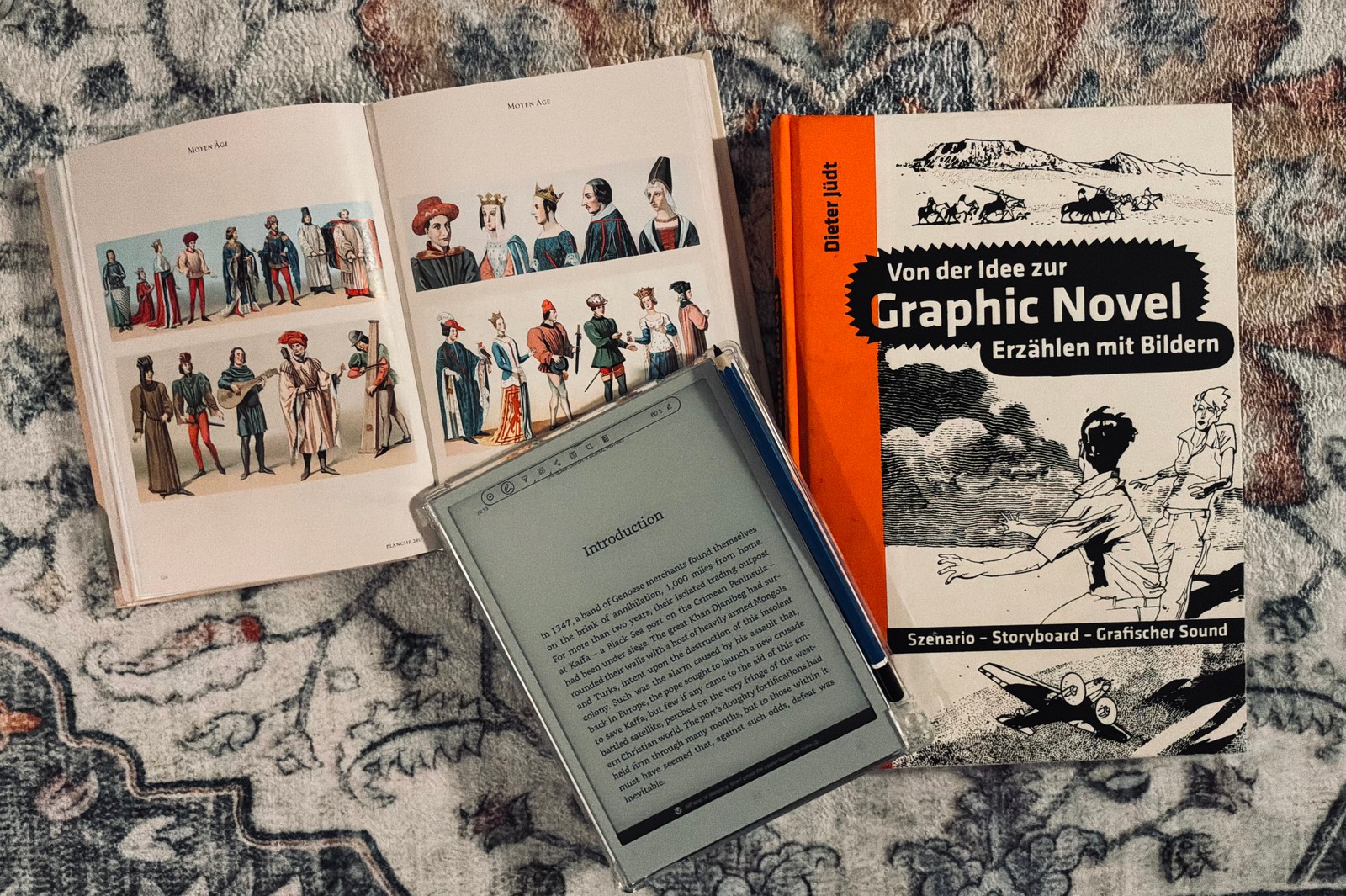
aesthetic dump on the floor - guess the theme I am obsessed with

P.S. I am still reading "The History of Christianity", but as the classical planning fallacy demands, the thematic quarter will be longer than expected. Still infuriatingly interesting topic!

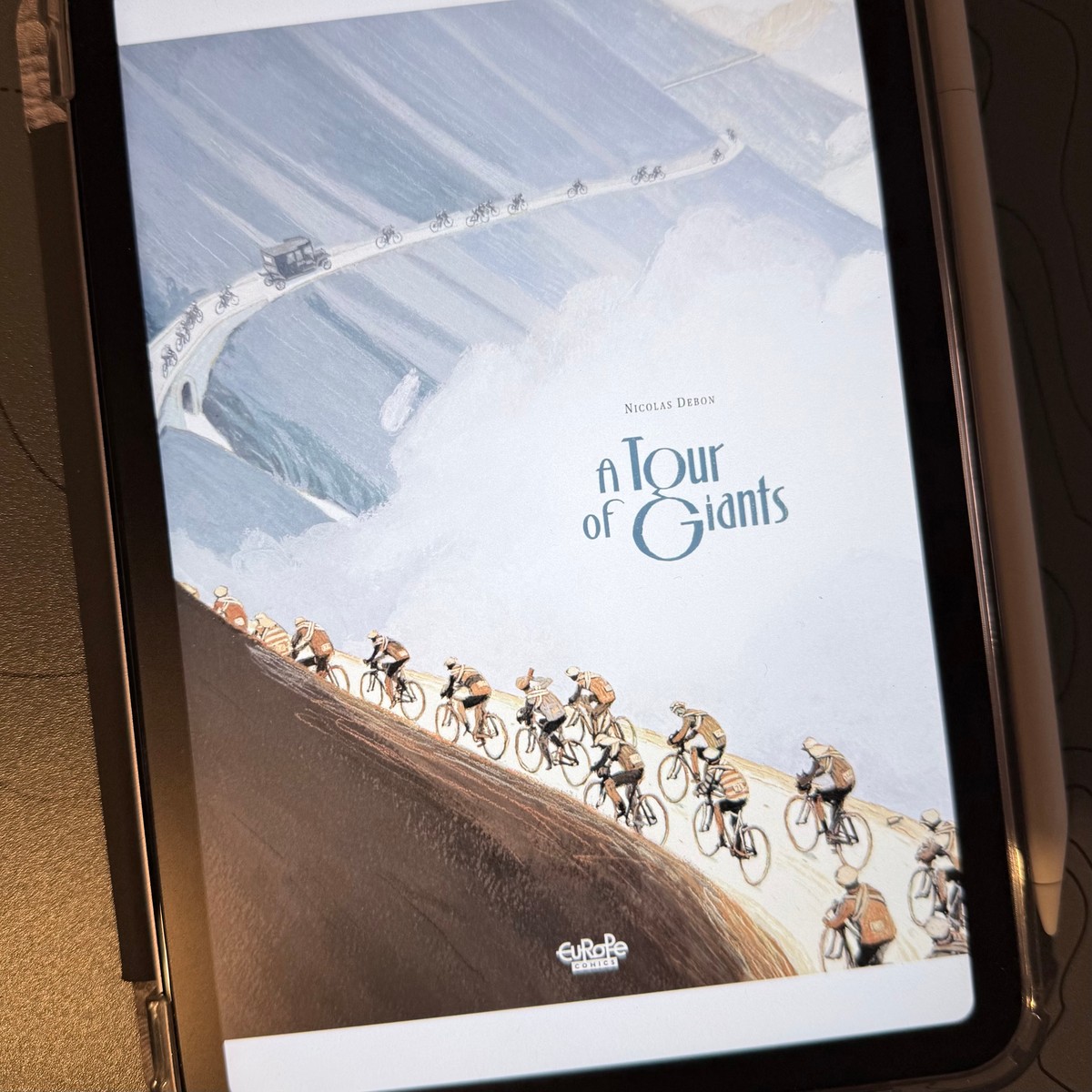
A Tour of Giants, 2023 (original 2009)

the cover
the cover

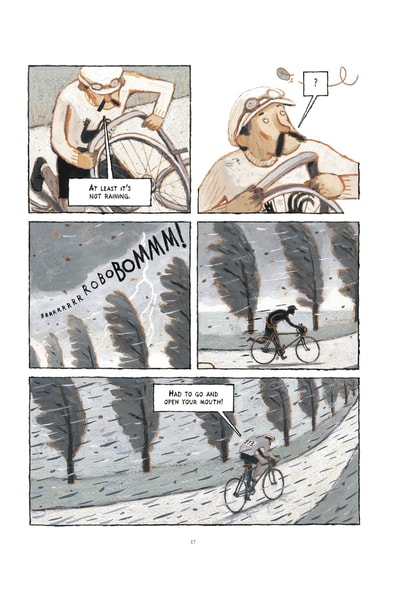
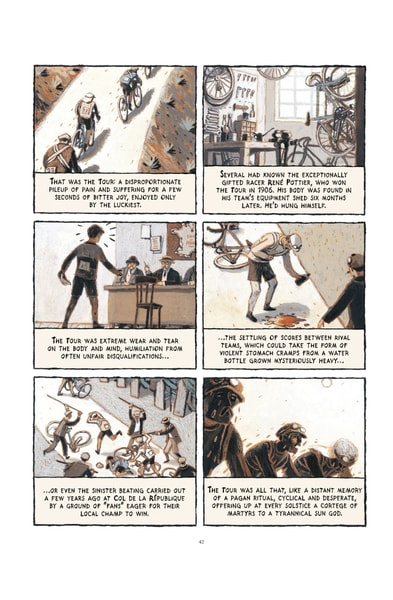
Today Tour de France is a commonplace name for human endurance. You might not ride a bike, but you have heard about this elite competition. Well, in the beginning of the twentieth century it used to be brutal. Seriously brutal.

I first encountered the topic of early Tour de France on a GCN YouTube channel, where they recreated a stage of 1903 on original vintage bikes. It is worth watching, especially for the thoughts on how, even today, on good tarmac and with contemporary gear, like light (or bibs), it is an extremely hard enterprise. 

watch GCN video here

Now, imagine 1910, with the state-of-the-art bikes, that will not qualify today even for a commute in the city, unsupportive (mildly understated) organisers, over 4000 kilometres in three weeks in horrible weather and road conditions, and you will scratch the surface of how mad this race used to be. 

Nicolas Debon tries to convey the hardship of 1910 in frames as short as breath of a cyclist going uphill. He introduces the major contestants and their rivalry, the forces of nature these Giants had to endure, and the psychological toll too much to bear sometimes. "Murderers!" cries one of them to the organisers, and murderers these were. Circling the hexagon, as France is known, with the ever-changing terrain and climate, with inhumane rules and severe road conditions - we cannot fathom it today. 

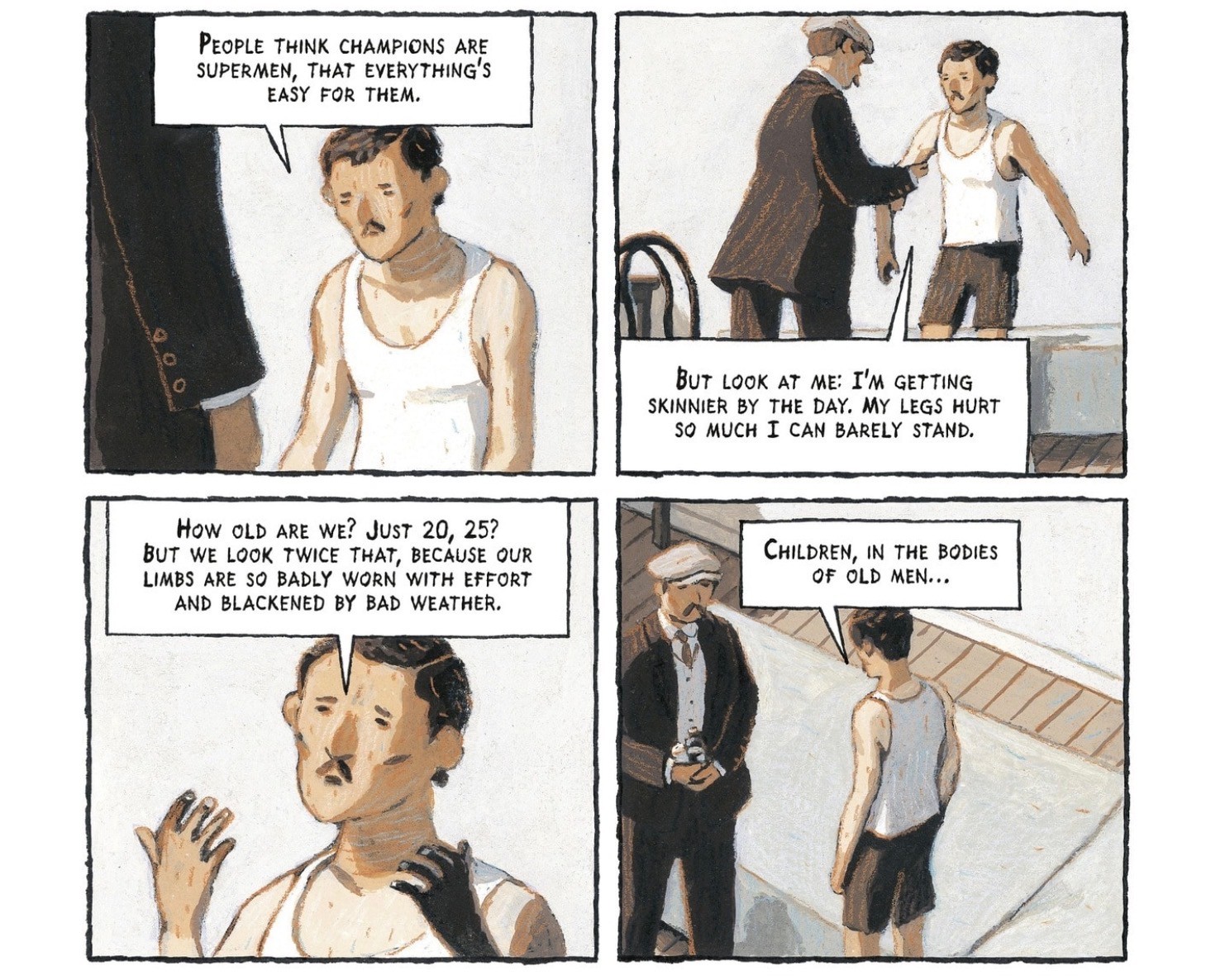
young men as old men

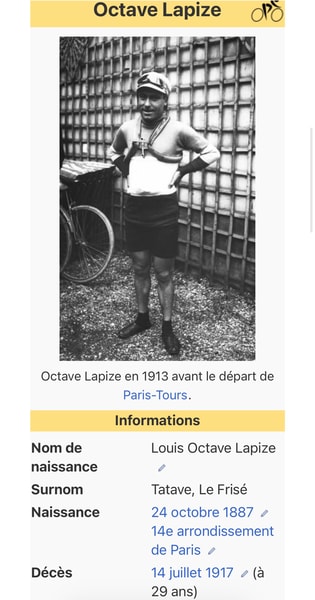
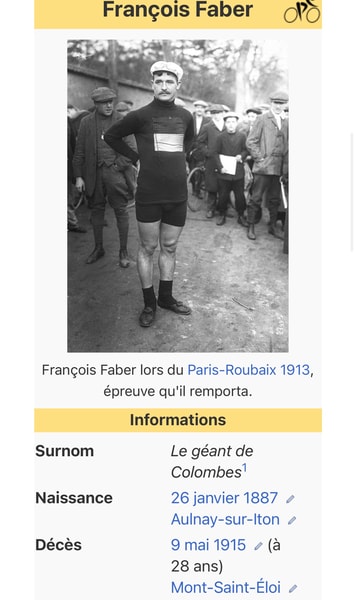
One of the topics that particularly caught me off guard, is the further fate of the winners and other racers. When the first to places of the race in 1903 made it to their sixties, Louis Octave Lapize (1st place) and François Faber (2nd place) along with many others, did not make it to their thirties. The Great War claimed the Great Men. 

They are called Giants for a reason.